Beauty Tech · Cosmetics Industry
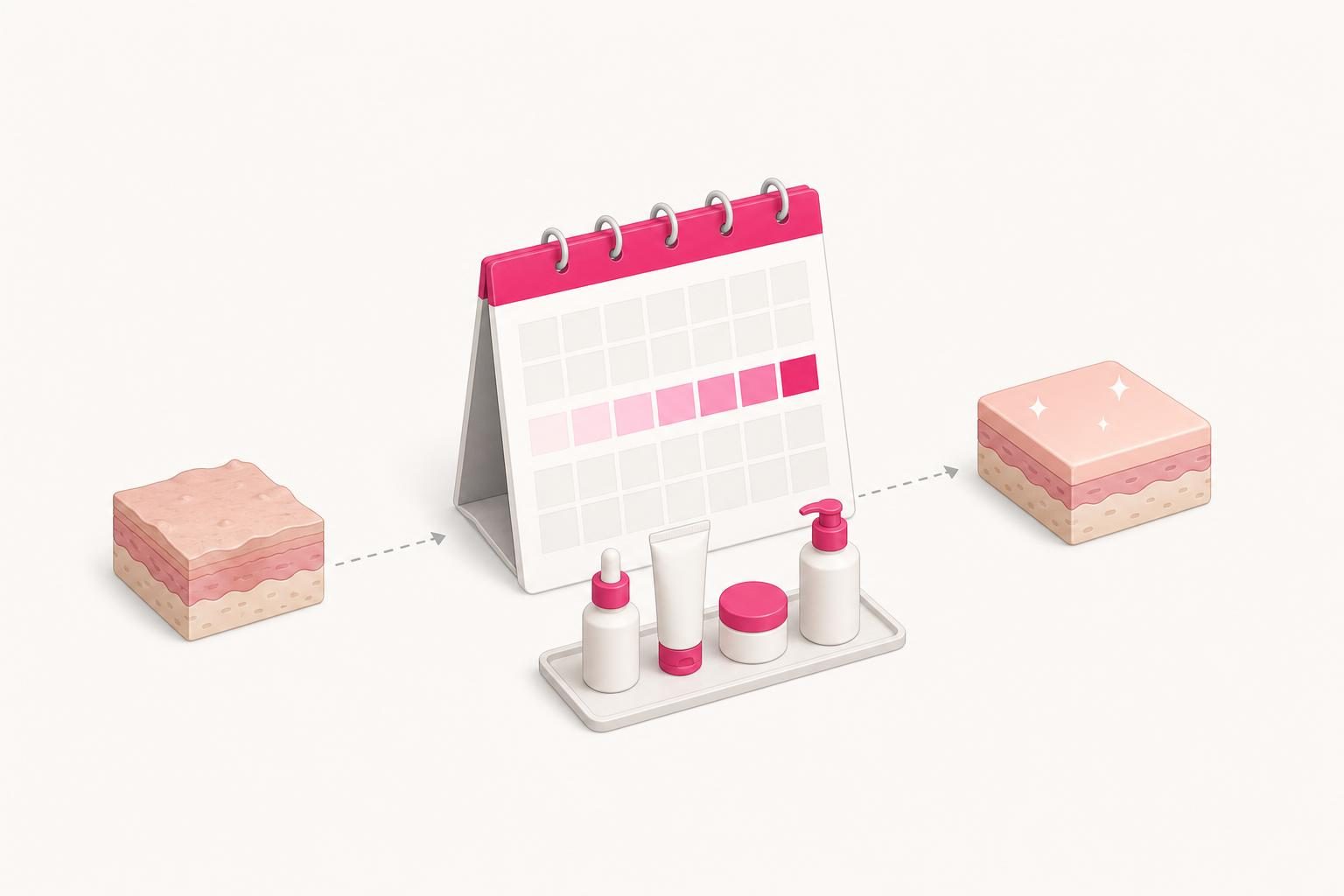
You cannot judge a skincare product in a week
Skin turnover, seasonality and the habit of changing several things at once make most personal verdicts on skincare unreliable. Here's how to test properly.
Most people decide whether a skincare product works within about a week. Almost nobody has enough information to make that call, and the reasons are structural rather than a matter of patience.
If you’ve cycled through products that “didn’t do anything”, it’s worth knowing why the test was unlikely to give you a clear answer.
Skin works on a slower clock than your expectations
The outer layer of skin renews over a period of weeks, and that period lengthens with age. Anything whose effect depends on renewal — texture, tone, the appearance of fine lines — cannot show its result before at least one full cycle has passed, and usually needs several.
So the realistic windows look roughly like this:
- Hydration and barrier feel: days. These are genuinely quick.
- Irritation and breakouts: days to a few weeks — including purging, where a product that will eventually help makes things briefly worse.
- Texture and tone: one to three months.
- Firmness, deeper lines: longer still, and modestly.
A two-week trial reliably answers one question: did it irritate me. It cannot answer whether it worked.
Four things that corrupt the verdict
Changing several things at once. New cleanser, new serum, new moisturiser, same week. If your skin improves you don’t know why; if it reacts, you don’t know to what. This is the most common and most costly mistake.
Seasonality. Skin behaves differently in winter heating and summer humidity. A product started in October is tested against a changing baseline, and the season may be doing more than the bottle.
Everything else in your life. Sleep, illness, stress, medication, hormonal cycles. These move skin substantially. Any of them can mask a real effect or manufacture an apparent one.
Memory. You are comparing today’s face in today’s mirror against a recollection. Human memory for gradual visual change is poor — which is why slow improvement often goes unnoticed and sudden deterioration feels worse than it is.
How to run a test that tells you something
The method is unglamorous and it works:
- Change one product at a time. Then hold everything else steady.
- Give it the right window for the outcome you care about. Four weeks minimum for anything beyond hydration; eight to twelve for texture and tone.
- Take a photograph at the start, and then at fixed intervals. Same light, same time of day, same position, no makeup. This single habit does more than anything else on this list, because it replaces memory with evidence.
- Write down two things weekly: how your skin feels, and anything unusual in your life that week. When you review, those notes explain most of the anomalies.
- Patch test first, particularly with actives.
Done this way, a product gets a verdict you can rely on — and you stop re-buying things that never worked and abandoning things that were about to.
When to stop early
The one reason not to wait: persistent irritation. Stinging that doesn’t settle, redness that spreads, itching, swelling. Purging in an area where you normally break out can be temporary; a reaction spreading to areas you don’t usually have trouble with is not.
Stop, simplify to a gentle cleanser and a plain moisturiser, let the barrier recover, and reintroduce one thing at a time.
And the part worth saying plainly
Consistency beats product selection more often than the industry’s marketing would suggest. A simple routine followed daily for three months will usually outperform an elaborate one abandoned after three weeks — and it also happens to be the only version that produces a clear answer about what’s working.
RaySnail is an AI skincare analysis platform that builds personalised routines from clinical insight rather than guesswork. More at raysnail.com.